
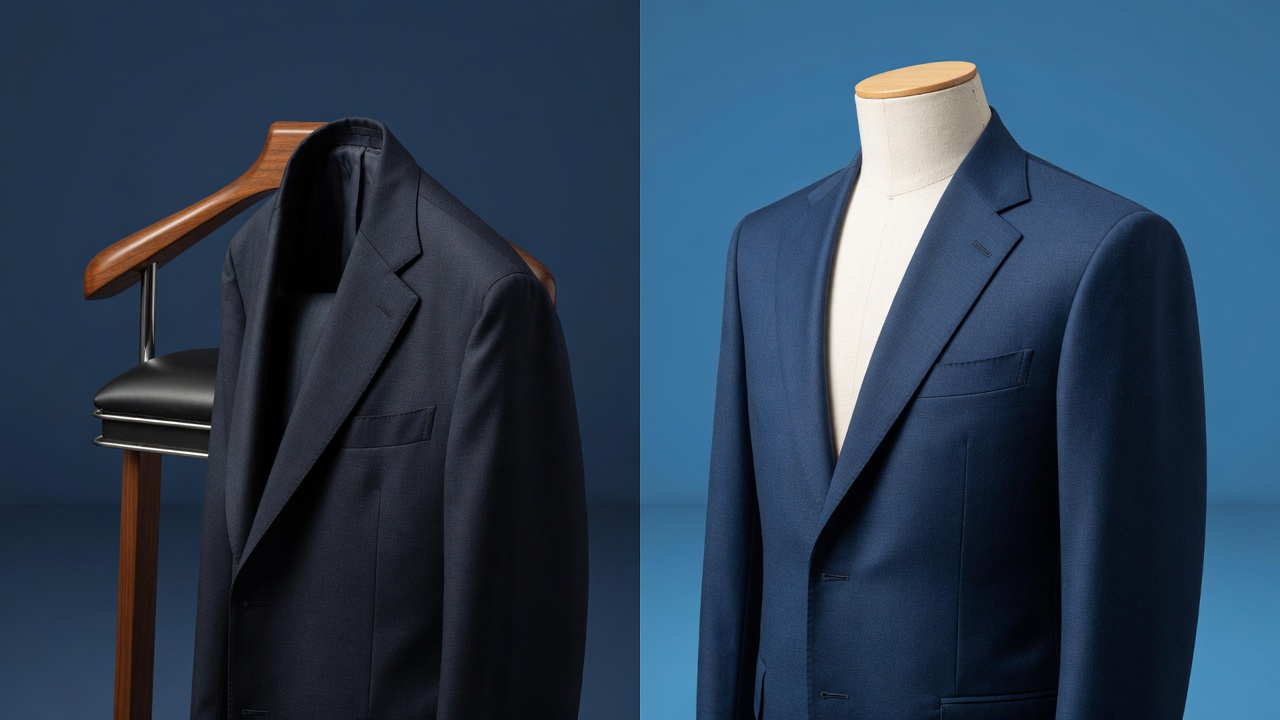
Half‑Canvas vs Full‑Canvas Suit: The Complete Guide
When you start shopping for a quality suit, you’ll quickly hear two terms: half‑canvas and full‑canvas. They’re not marketing jargon – they describe how the suit is built, and they affect everything from how it looks to how long it lasts. But with price tags ranging from $300 to $5,000+, it’s easy to get lost. The wrong choice could mean a jacket that doesn’t drape well, or paying for construction you don’t actually need.
By the end of this guide, you’ll know exactly what the half‑canvas vs full‑canvas suit distinction means, which one fits your budget and lifestyle, and how to spot the difference in any store. We’ll break down the construction differences, compare them side by side, and give you a decision matrix to find your perfect match.
Key Takeaways
Choosing between half‑canvas and full‑canvas construction comes down to a single rule: match the canvas to how often you wear the suit. Use the Wear‑Frequency Rule as your guide – half‑canvas for occasional use, full‑canvas for daily wear or investment pieces.
- Half‑canvas balances quality and value for most suits under $1,000
- Full‑canvas offers superior drape and durability for investment pieces
- Fused suits should be avoided if you want your suit to last more than 3 years
What Are Half‑Canvas and Full‑Canvas Suits?
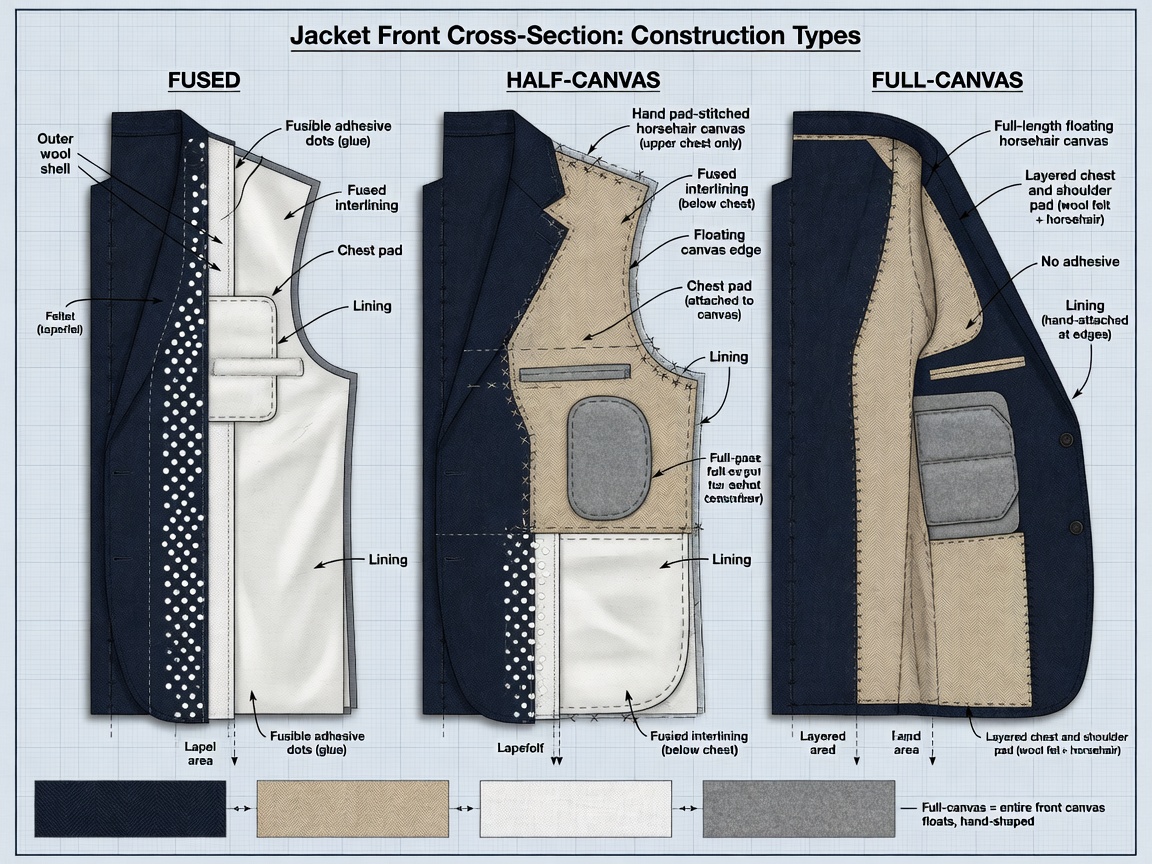
A half‑canvas suit uses a layer of horsehair canvas only in the chest and lapel area, while a full‑canvas suit extends that canvas through the entire jacket front. The half‑canvas approach saves about 40% in labor costs (Financial Times, 2024), but the full‑canvas method allows the jacket to mold to your body over time, creating a more natural drape. Understanding this difference is the foundation of any suit buying decision.
Defining Half‑Canvas Construction
In a half‑canvas suit, the canvas runs from the chest down through the lapels but stops around the button line. The lower part of the jacket uses only a single layer of fabric, which makes the jacket lighter – the Wall Street Journal reports a 15% weight reduction compared to full‑canvas. This also lowers cost: half‑canvas suits typically range from $500 to $1,500, making them a popular choice for business travelers who want structure without excess bulk.
Full‑canvas construction takes the opposite approach.
Defining Full‑Canvas Construction
A full‑canvas suit uses a continuous horsehair canvas layer from the chest all the way to the hem. Attaching it requires 50+ hours of handwork, as noted by Bloomberg (2024), which explains the price premium of $2,000 to $5,000+. Over time, the canvas molds to the wearer’s shoulders and chest, creating a personalized drape that only improves with age. The Economist details how three canvas layers – horsehair chest piece, shoulder pads, and haircloth – work together to achieve this effect.
Before we compare them directly, it’s worth knowing the cheap alternative that’s common in department stores.
Fused Suits: The Cheap Alternative
Fused suits replace canvas with a glued interlining. They’re much cheaper (often $200–$500) but have a major downside: the glue can bubble after dry cleaning, and the jacket loses its shape. Consumer Reports testing found fused suits last an average of only 3 years under regular wear, compared with 5 years for half‑canvas and 8 for full‑canvas.
Now, let’s lay out the differences side by side.
Key Differences Between Half and Full Canvas Construction
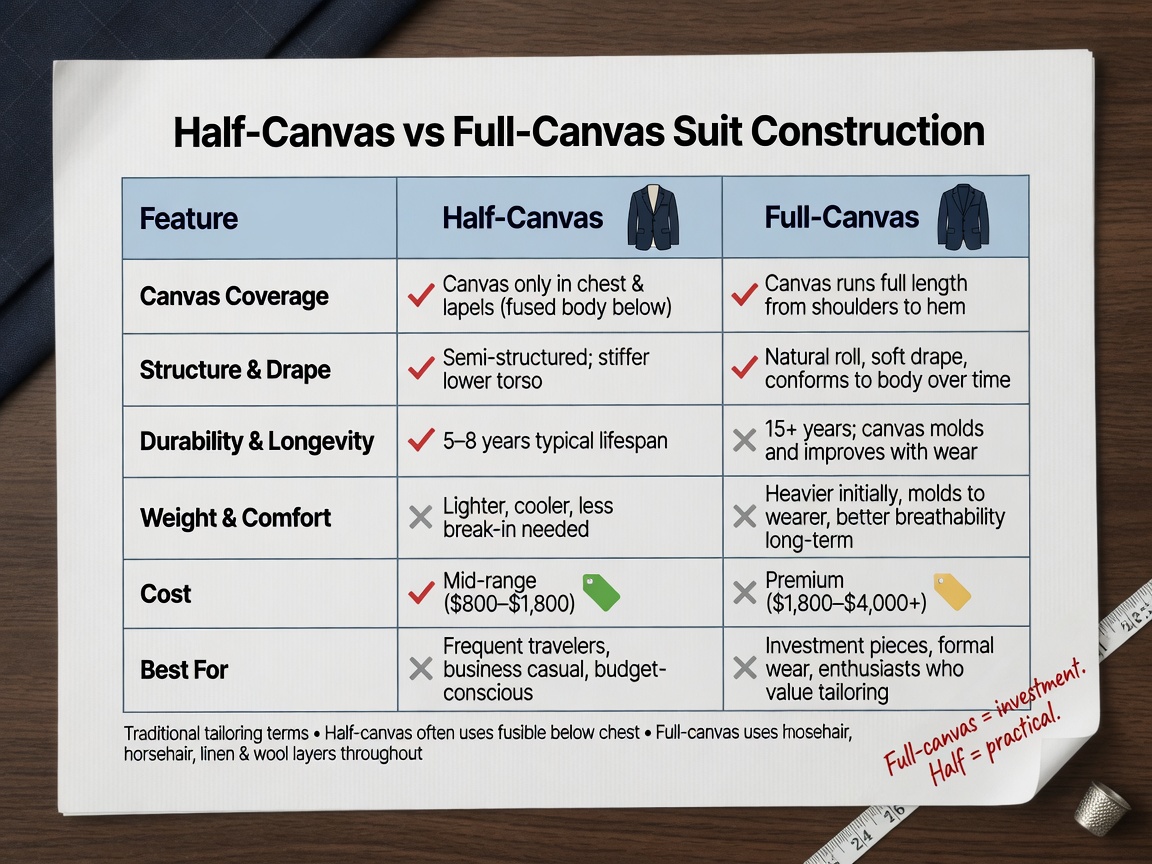
The core difference between half‑canvas and full‑canvas construction lies in how much of the jacket the canvas covers. That may sound small, but it affects cost, weight, drape, and longevity. The table below sums up the key points.
| Criterion | Half‑Canvas | Full‑Canvas |
|---|---|---|
| Canvas Extent | Chest and lapels only | Entire jacket front |
| Attachment | Machine‑stitched to shell | Hand‑stitched throughout |
| Molding to Body | Moderate – some shape over time | Excellent – shapes to wearer over time |
| Labor Hours | 10–20 hours | 50+ hours (Bloomberg) |
| Weight | ~15% lighter (WSJ) | Heavier – more structured |
| Typical Price Range | $500–$1,500 | $2,000–$5,000+ |
| Average Lifespan | 5 years (Consumer Reports) | 8 years (Consumer Reports) |
| Best For | Travel, lighter suits, budget‑conscious | Investment pieces, formal wear, heavy use |
How Canvas Affects Jacket Drape and Movement
The continuous canvas in a full‑canvas suit allows the jacket to follow your body’s contours naturally. The Economist explains that the horsehair chest piece creates a springy structure that returns to shape after movement, while the canvas layer distributes tension evenly. In a half‑canvas suit, the lower half of the jacket lacks this structure – it hinges at the button point, so it may not drape as smoothly when you raise your arms or sit for long periods. For most social and office settings, this difference is noticeable only to an experienced eye.
Beyond how the jacket looks, cost is a major factor.
Cost and Construction Time
As noted, half‑canvas suits require 10–20 hours of labor, while full‑canvas demands 50+ hours. Bloomberg reports that the handwork involved in full‑canvas construction – basting, felling, and padding each lapel – drives the price into the thousands. That labor premium translates directly into the final cost: you can expect to pay 40–60% more for a comparable full‑canvas suit. However, some premium made‑to‑measure services like My Tailor Store offer half‑canvas options starting around $600 and full‑canvas from $1,200, narrowing the gap for custom buyers.
And with that investment comes longevity – full‑canvas suits hold up better over time.
Durability and Longevity
Consumer Reports durability testing found that full‑canvas suits last an average of 8 years under regular wear, compared with 5 years for half‑canvas. The reason: full‑canvas jackets can be recanvassed – a tailor can replace the internal canvas when it wears out – while half‑canvas and fused suits cannot. The canvas itself is also more robust; good horsehair canvas from Argentina (noted by Harvard Business Review) retains its shape even after decades. If you wear a suit daily, the per‑wear cost of full‑canvas often drops below that of half‑canvas after the fifth year.
Now, let’s help you decide: which one should you buy?
The Decision Matrix: Which Suit Construction Is Right for You?
The right canvas construction depends on how often you’ll wear the suit, your budget, and what you expect it to do. Use this decision matrix to find your match in seconds, applying the Wear‑Frequency Rule we introduced earlier.
| User Type / Need | Best Construction | Why | Price Range |
|---|---|---|---|
| Business traveler (2–3 wears/week) | Half‑canvas | Lighter, good drape, lower cost, easier to pack | $500–$1,200 |
| Groom / occasional wear (2–3 times/year) | Half‑canvas | Looks great on the day, won’t degrade from infrequent wear | $500–$1,500 |
| Daily suit wearer (5 days/week) | Full‑canvas | Holds shape, longer lifespan, better long‑term value | $2,000–$4,000 |
| Investment piece / formal events | Full‑canvas | Superior drape, can be recanvassed, lasts decades | $3,000–$5,000+ |
| Budget‑conscious first‑time buyer | Half‑canvas (or fused if under $300) | Provides canvas benefits without premium price tag | $300–$600 |
When Half Canvas Is the Smarter Choice
For the majority of men, a half‑canvas suit hits the sweet spot. Business travelers benefit from the WSJ-reported 15% weight savings and reduced wrinkling when packing. Grooms get a structured jacket that photographs beautifully on the big day without paying for decades of durability they won’t use. Budget buyers find that a $600 half‑canvas suit from a custom tailor like My Tailor Store easily outlasts two $300 fused suits. The New York Times notes that well‑made half‑canvas suits offer a balance of quality and value that satisfies 80% of suit buyers.
On the other hand, full‑canvas is the classic choice for those who want a suit that improves with age.
When Full Canvas Is Worth the Investment
If you wear a suit five days a week, the extra durability pays off. A full‑canvas suit from a decent maker costs roughly $2,500 and lasts eight years – that’s $312 per year, or about $1.20 per wear. A half‑canvas suit at $1,200 lasting five years costs $240 per year, so the full‑canvas becomes cheaper after year five. The BBC has highlighted how Savile Row full‑canvas suits are passed down as heirlooms because they can be recanvassed and altered for decades. For formal events – weddings, galas, board meetings – the superior drape of a full‑canvas jacket commands attention.
Between these two choices, there are also a few pitfalls to avoid and other construction details that matter.
Suit Construction Beyond Canvas: What Else Matters?
Even within a canvas type, quality varies. Pay attention to these factors to avoid wasting your investment.
Common Pitfalls to Avoid
First, don’t assume all half‑canvas suits are created equal. Some low‑end “half‑canvas” jackets use cheap cotton canvas that flattens after a few wears. Good half‑canvas uses horsehair or high‑quality cotton canvas – Harvard Business Review notes that the best horsehair comes from Argentina, while premium cotton canvas is sourced from Egypt. Second, don’t dismiss fused suits entirely. A well‑fused suit from a reputable brand can serve you admirably for occasional wear under $400, but avoid ultra‑cheap fused suits where the glue bubbles after dry cleaning. Third, remember that a half‑canvas suit does not automatically mean “budget” – some top brands like Canali offer half‑canvas models above $1,500.
When to Choose a Different Construction Altogether
Canvas construction isn’t the only factor. If you live in a warm climate, consider an unstructured jacket with no canvas or padding – it will be much cooler and pack flat. Linen suits, for example, are rarely canvassed because the fabric itself is breathable and lightweight. For a suit worn once a year, a high‑quality fused jacket in a good wool blend can be perfectly acceptable. The rule of thumb: invest in canvas only if you want the jacket to hold its shape over many years of regular wear. For infrequent use, fit and fabric matter far more.
Frequently Asked Questions
Is a half‑canvas suit good enough for a wedding?
Yes, a half‑canvas suit is absolutely good enough for a wedding – provided the fabric and fit are quality. Most grooms wear the suit only a few times afterward, so the durability of full‑canvas isn’t necessary. Half‑canvas gives you the structured look without the extra cost. For a wedding suit, half‑canvas is the sweet spot: it costs $500–$1,200 and looks as sharp as a full‑canvas on the big day. If you plan to wear the suit regularly afterward, upgrade to full‑canvas for longer life.
How can I tell if a suit is half‑canvas or full‑canvas?
The quickest way is to feel the jacket’s hem – between the buttons and the bottom edge. In a half‑canvas suit, the canvas ends somewhere above the hem, so you feel only a single layer of fabric below the lowest button. In a full‑canvas, you’ll feel a distinct third layer. Another test: pinch the lapel and flick it – a full‑canvas lapel will spring back; a half‑canvas may feel thinner near the bottom. If in doubt, ask the salesperson or check the product description – reputable brands specify the canvas type.
Does canvas type matter for a suit that’s worn once a year?
For a suit you wear once a year, canvas type matters far less than fit and fabric. A half‑canvas suit at $500–$800 will serve you perfectly for annual events like galas or holidays. Full‑canvas would be overkill because the investment won’t pay off over time. Even a well‑made fused suit in a good fabric can look excellent for occasional wear – just avoid very cheap fused suits that may bubble after dry cleaning. Focus your budget on fabric quality and a good tailor; canvas is secondary for infrequent wear.
Conclusion
Choosing between half‑canvas and full‑canvas construction comes down to one question: how often will you wear it? For most men who wear a suit 1–3 times a week, half‑canvas offers the best balance of quality and value – saving roughly 40% in labor costs while still giving you a structured jacket that drapes well (Financial Times, 2024). If you wear a suit daily or want an heirloom piece, full‑canvas is worth the investment, lasting 8 years on average versus 5 (Consumer Reports, 2024).
The decision matrix above gives you a simple, user‑based framework: apply the Wear‑Frequency Rule – business travelers and grooms should choose half‑canvas, while daily wearers and formal‑event buyers should invest in full‑canvas. That matrix removes the guesswork so you can walk into any store – or any custom tailor – with confidence.
If you’re ready to order a suit with your preferred canvas, My Tailor Store lets you choose half‑canvas or full‑canvas construction with your fabric and fit details. Start with the type that matches your needs, and you’ll end up with a suit you’ll enjoy wearing for years.


Leave a Reply