How to Choose Side Adjusters for Custom Pants: A Complete Guide
Your trousers fit in the waist, but the belt buckle still creates a bulge under your jacket. Side adjusters solve that — giving you a flat, clean line from jacket to shoe. Belt loops add bulk and make you adjust your waistband throughout the day. The constant tugging distracts from your otherwise sharp appearance. By the end of this guide, you’ll know exactly whether side adjusters are right for your next pair of custom trousers — and how to use them for the best fit. We’ll compare side adjusters to belt loops, break down the different types, and walk through practical scenarios and customization options.
Key Takeaways
Side adjusters provide a cleaner, more formal silhouette than belt loops while offering subtle day‑to‑day adjustability.
- Clean line: No belt buckle means a smoother, uninterrupted torso.
- Tailor‑friendly: Easy to add or remove during custom trouser orders.
- The 3‑Factor Test: Formality, Fit, and Flexibility determine which waistband is best for you.
Why Side Adjusters Enhance Your Trousers
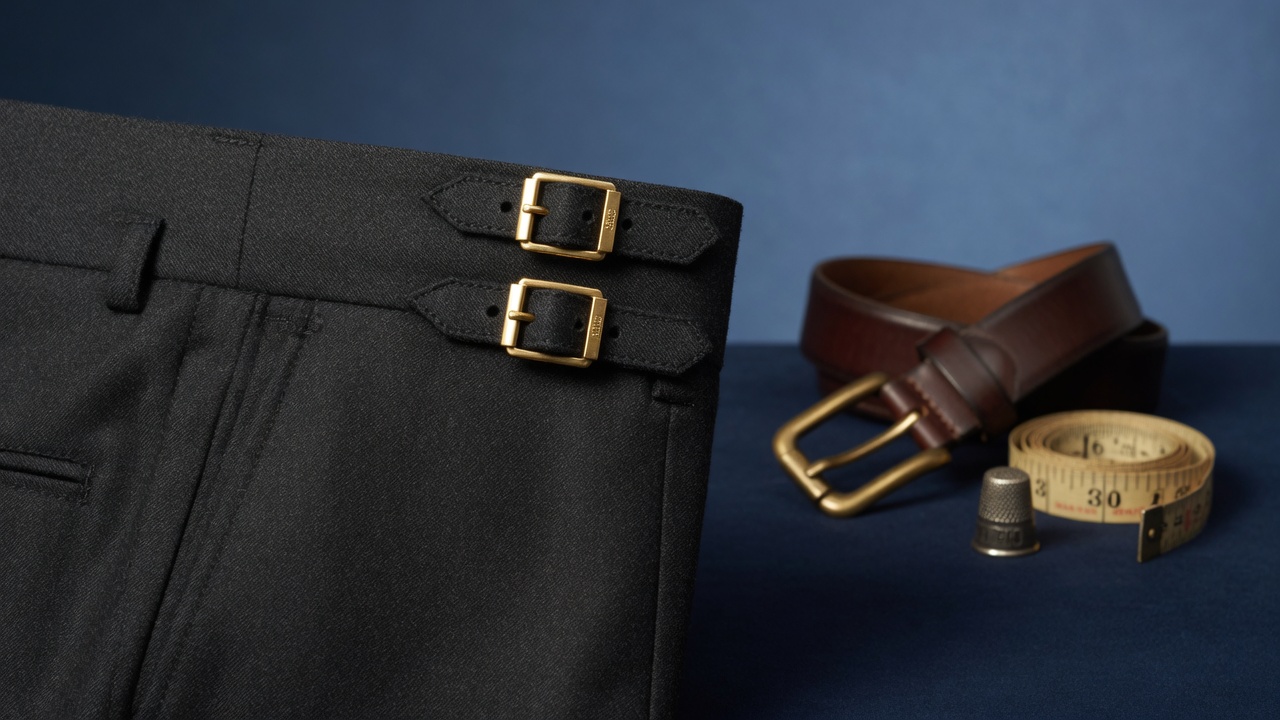
Side adjusters — the small fabric tabs with buckle or button closure on the waistband — create a streamlined silhouette that belt loops simply cannot match. When you wear a jacket, any bulge from a belt buckle disrupts the line from your shoulders to your shoes. Side adjusters sit flush against the waistband, hiding the adjustment mechanism and preserving a smooth, elegant outline.
A Cleaner, More Polished Silhouette
The most‑cited benefit among custom trouser buyers is the elimination of belt bulk. Instead of a metal buckle pressing into your stomach and adding an inch of visual thickness, side adjusters keep the waistline flat. This is especially important under a suit jacket or tuxedo, where every extra millimeter shows. For men who value a refined appearance, the difference is immediate: your trousers look purposeful, not just functional.
Freedom of Movement and All‑Day Comfort
Beyond appearance, comfort matters just as much. Side adjusters tighten or loosen incrementally — ideal for weight fluctuations or post‑meal bloat. You can nudge the fit a quarter‑inch tighter without unbuckling, or release it if you’ve had a heavy lunch. Belts, by contrast, require changing holes, which often means a full unbuckling and re‑threading. And because there is no belt pressing against your abdomen, you avoid waistband pressure points and restricted movement. Across professional menswear communities, the consensus is that side adjusters deliver superior all‑day ease for anyone who sits, walks, or bends.
The 3‑Factor Test – A Simple Framework
These benefits make side adjusters compelling, but how do you decide if they’re right? That’s where The 3‑Factor Test comes in. Formality, Fit, and Flexibility. The more formal the occasion, the stronger the case for side adjusters. Side adjusters work best when trousers already fit well at the waist. And the more your weight or activity changes, the more you might need a belt over adjusters.
Now let’s see how side adjusters stack up directly against belt loops.
Side Adjusters vs Belt Loops: Head‑to‑Head
Are side adjusters better than belts? The answer depends on your priorities. A balanced comparison across aesthetics, comfort, and practicality reveals that neither is universally superior — each excels in specific contexts defined by The 3‑Factor Test.
Aesthetics and Formality
Side adjusters keep the waistband clean, making them the default choice for dress trousers, suits, and tuxedos. Belt loops often look more casual and add visual clutter — especially when the belt is a different color or material. In bespoke tailoring, side adjusters are the standard for any trouser intended to be worn with a jacket. They signal attention to detail that a belt simply cannot replicate.
Comfort and Adjustability
Side adjusters allow micro‑adjustments; belts require changing holes. A belt can pinch or dig into your hips after hours of sitting. Side adjusters distribute pressure evenly across the waistband, reducing localized discomfort. For men who eat a big lunch or travel frequently, the ability to fine‑tune fit without unbuckling is a genuine advantage.
Practical Drawbacks of Side Adjusters
No option is perfect. Side adjusters have a maximum adjustment range of about 1–2 inches — larger weight swings require a belt. On very slender men, side adjusters can bunch fabric and look messy if not properly fitted. Belt loops remain better for high‑activity days or when tucking in thick sweaters. They also allow you to change belts to match different shoes or occasions — flexibility that side adjusters cannot offer.
Quick Comparison Table
| Criteria | Side Adjusters | Belt Loops |
|---|---|---|
| Aesthetics | Clean, flat line | Buckle adds bulk |
| Formality | Higher – suited for suits/tuxedos | Lower – casual to smart‑casual |
| Adjustability | ±1–2 inches | Unlimited (new hole) |
| Best For | Dress trousers, tailored fits | Everyday work pants, fluctuating weight |
| Cost Impact | Slightly more (tailor work) | Standard construction, no extra cost |
To make the choice clearer, run each option through The 3‑Factor Test. For a formal wedding with a suit, side adjusters win. For daily office wear with fluctuating weight, belt loops are more practical.
Types of Side Adjusters and How They Work
Pants with side adjusters come in three main varieties — buckle, button, and elastic — each suited to different levels of formality and comfort.
Buckle Side Adjusters
The classic choice: a small metal buckle with a lever that cinches the waistband. Most common on dress trousers, buckle adjusters offer precise, incremental tightening. They are the most formal type, often found on bespoke trousers and tuxedo pants. Best for occasions where appearance matters more than maximum adjustability.
Button Side Adjusters
For a more subtle look, button adjusters offer a clean alternative. Small buttons are sewn inside the waistband, and fabric tabs fasten over them. They provide a minimalist, almost invisible adjustment — ideal for high‑end custom trousers where the waistband should appear uninterrupted. Common on luxury off‑the‑rack brands as well.
Elastic Side Adjusters
Elastic adjusters bring a modern twist: a knitted or woven elastic panel that stretches within the waistband. They offer maximum comfort for casual or high‑waisted trousers but limited adjustability. Best for relaxed fits where you want ease of movement without sacrificing a belt‑free waistline. They are considered the least formal option.
Now that you know the types, the next question is when to actually use them.
When to Choose Side Adjusters
The 3‑Factor Test applies directly here: Formality, Fit, and Flexibility guide your choice in every scenario.
Formal Events and Dress Trousers
Side adjusters are standard for formal trousers. At a wedding, for example, photographs will capture every line of your suit. A belt buckle creates an unfortunate bump; side adjusters keep your waist flat and the jacket draping cleanly. In classic menswear, wearing a belt with a tuxedo is a style faux pas. Side adjusters — or suspenders — are the correct choice.
Hourly Work Dress Codes
If your office requires a suit every day, side adjusters belong on those trousers. You will look more polished, and you will never have to adjust a belt under a jacket. If your dress code is business casual — chinos, untucked shirts, or khakis — belt loops serve you better. You will likely change belts to match different shirts, and the casual look doesn’t require the flat waistline of a suit. Apply the Fit factor: if your weight is stable and your trousers fit perfectly, side adjusters still work even in casual settings.
Casual and High‑Waisted Trousers
High‑waisted trousers, which sit at the natural waist, often benefit from side adjusters because belts can bunch here. On the other hand, slender men may find side adjusters less effective — the tabs can gap or create awkward bunching. For body types with a flat midsection and stable weight, side adjusters are excellent. For men with a more curved waistline or daily weight variation, belt loops provide the needed room to accommodate.
If you already own trousers with belt loops, don’t worry — you can often make the switch.
Customizing Your Trousers: Add or Remove Side Adjusters
If you want to replace belt loops with side adjusters on existing pants, a skilled tailor can do it. The process and cost vary depending on the trousers.
Removing Belt Loops
A tailor uses a seam ripper to remove belt loops, then closes any tiny holes left behind. This costs $20–$50 and works best on trousers you plan to keep long‑term. The result is a waistband ready for side adjusters or left clean — whichever you prefer.
Adding Side Adjusters to Existing Pants
Adding side adjusters is more involved. The tailor must attach fabric tabs and hardware to the waistband. This requires sufficient fabric — thin or stretch trousers may not support the addition. Expect to pay $40–$80. It is worth it only for high‑quality trousers that fit well otherwise. A conversion on a $30 pair of chinos is rarely cost‑effective.
Cost and Practicality – DIY vs Tailor
DIY kits exist for under $20, but they require basic sewing skills. Mistakes can ruin the waistband. Professional tailoring ($20–$80) is safer and guarantees a clean result. For most men, spending $60 once to upgrade a favorite pair of trousers is a smart investment in long‑term style.
Side Adjusters in Practice: Experienced tailors routinely recommend side adjusters for dress trousers because they eliminate the need for a belt buckle pressing against the abdomen. The clean line from shoulder to shoe that side adjusters preserve explains why they remain the standard choice in bespoke suiting — where every millimeter of silhouette matters.
Now let’s wrap everything up.
Frequently Asked Questions
Do side adjusters work better than belts?
Side adjusters work better than belts for formal trousers because they create a clean silhouette without buckle bulk. They allow micro‑adjustments for comfort, especially after meals. Belts provide a wider range of adjustability but can feel restrictive after a long day. For office dress codes, side adjusters are preferred for suits, belts for chinos. Use The 3‑Factor Test to match your need.
Can you replace belt loops with side adjusters on existing pants?
Yes, a tailor can remove belt loops and add side adjusters to most tailored trousers. Expect to pay $20–$80 depending on the type of adjuster. The process involves closing any holes and reinforcing the waistband. It works best on trousers with a straight waistband and sufficient fabric.
Are side adjusters suitable for skinny men?
Side adjusters can work for slender men, but require careful adjustment. If body weight fluctuates, belt loops are more forgiving. When side adjusters are too tight, they can create fabric bunching. Skilled tailors can add extra fabric for a better drape. For skinny frames, buckle adjusters with multiple notches offer the most control.
What is the most formal type of side adjuster?
Buckle side adjusters are the most formal type, commonly found on bespoke dress trousers and tuxedo pants. They offer precise adjustment and a classic look. Button adjusters are also formal but less common; elastic adjusters are considered casual. For black‑tie events, buckle side adjusters are the industry standard.
Conclusion
Side adjusters deliver a cleaner silhouette and more polished look than belt loops for formal and tailored trousers. By applying The 3‑Factor Test — Formality, Fit, and Flexibility — you can determine which waistband option suits your wardrobe best. For dress trousers, go with side adjusters; for casual wear, belt loops remain the practical choice.
The 3‑Factor Test simplifies what can be an overwhelming choice. It reminds you that side adjusters are not a superior or inferior option — they are the right option when formality and fit are your priorities. Keep this framework in mind for any future trouser purchase.
Next time you order custom trousers, ask your tailor about adding side adjusters. If you already own trousers with belt loops, consider a professional conversion. The clean line you’ll gain is worth the small investment.